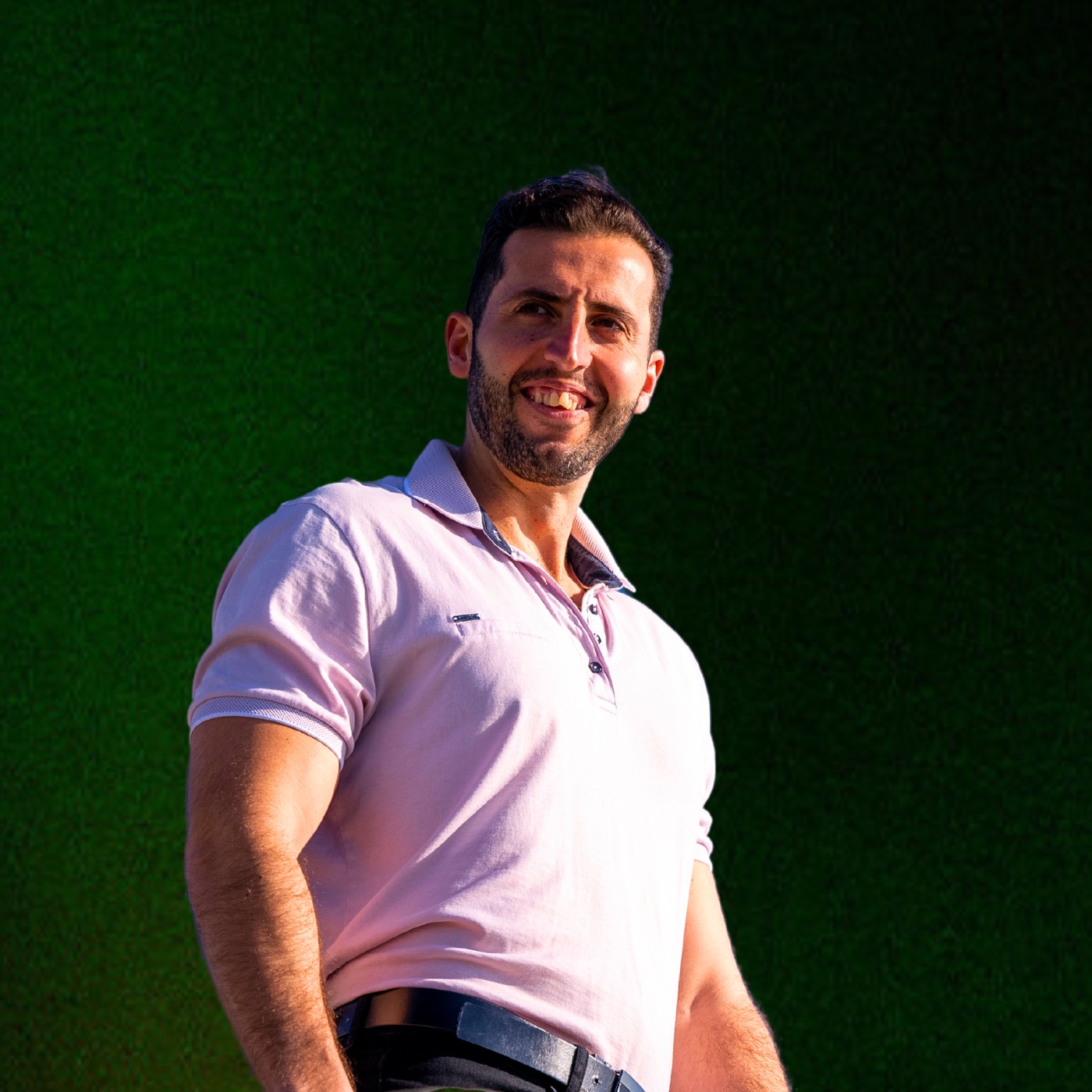
My side of the institute is harder to put into words than Luke's. His path is linear — engineering, IT, coaching, business, school. Mine meandered through inner work, contemplative practice, modality training, and years of one-to-one client sessions before any of it became a formal school. This is the personal version.
How I came to this work
I didn't decide at twenty that I wanted to be a practitioner. My own interest in the inner work came first — meditation in my late teens, almost by accident, through a book I picked up. The practice did something I couldn't explain. The doing of it was the point.
Over years I trained across modalities people would recognise. Breathwork through multiple lineages. Hypnotherapy. Energy work across a few traditions. Meditation in deeper retreat settings. What I kept noticing was that no single modality was the full answer. Each one held part of the truth. Each one missed pieces another one had.
So I kept practising. Kept sitting with clients. Kept refining what I was doing in sessions. Over years — in parallel to Luke working through coaching and hypnotherapy on his side — a coherent framework emerged. We compared notes constantly. The Quantum Key Method came out of those years of joint observation. Not invented by either of us alone. Developed together.
What I lead at QKI
The practitioner side. I lead the certification work across the six modalities, the in-room teaching, the deeper somatic and energetic work, and the day-to-day training of practitioners moving through the program. Luke leads the business side. We both lead the Quantum Key Method, because we both built it.
How I teach
Slower than Luke. Quieter. I'll sit in something for a long time. Ask a question and let the silence do most of the work. Students often say the thing they didn't expect about working with me was how much shifted for them personally just from being in the room while I was teaching. That's the work being transmitted, not performed.
I don't perform. The work is the work. Practitioners who train with me pick up a similar quality eventually — they stop reaching for technique and start trusting what's actually happening with the client in front of them.
What I come back to
What drives me outside the institute
Living to my highest potential. That's the orientation I keep coming back to in every part of my life, not just the work. The pursuit of it is also why I'm obsessed with learning new skills for transformation — ones I can use on myself first and then carry into the room with clients and students.
You could call me a researcher of what makes winners win. I'm constantly studying high performers, transformation processes, the actual mechanics of how someone becomes the next version of themselves. The work I do as a practitioner is genuinely informed by years of that research stacking up.
Alongside that I'm a master of esoteric teachings — over a decade of going deep into the universe, consciousness, the older contemplative traditions, and topics that some people would dismiss as rabbit holes. I don't dismiss them. They're a meaningful part of where the depth in the practitioner work comes from.
Luke and I work together full time. The brothers' relationship is close in a way that genuinely matters for how the institute holds together.
If you want to follow my work
My essay so far in this journal: Become the vibration of what you want. More to come. The deepest version of my teaching only exists inside the QKI practitioner training, particularly in the QKM and breathwork modules.
For connecting: LinkedIn.