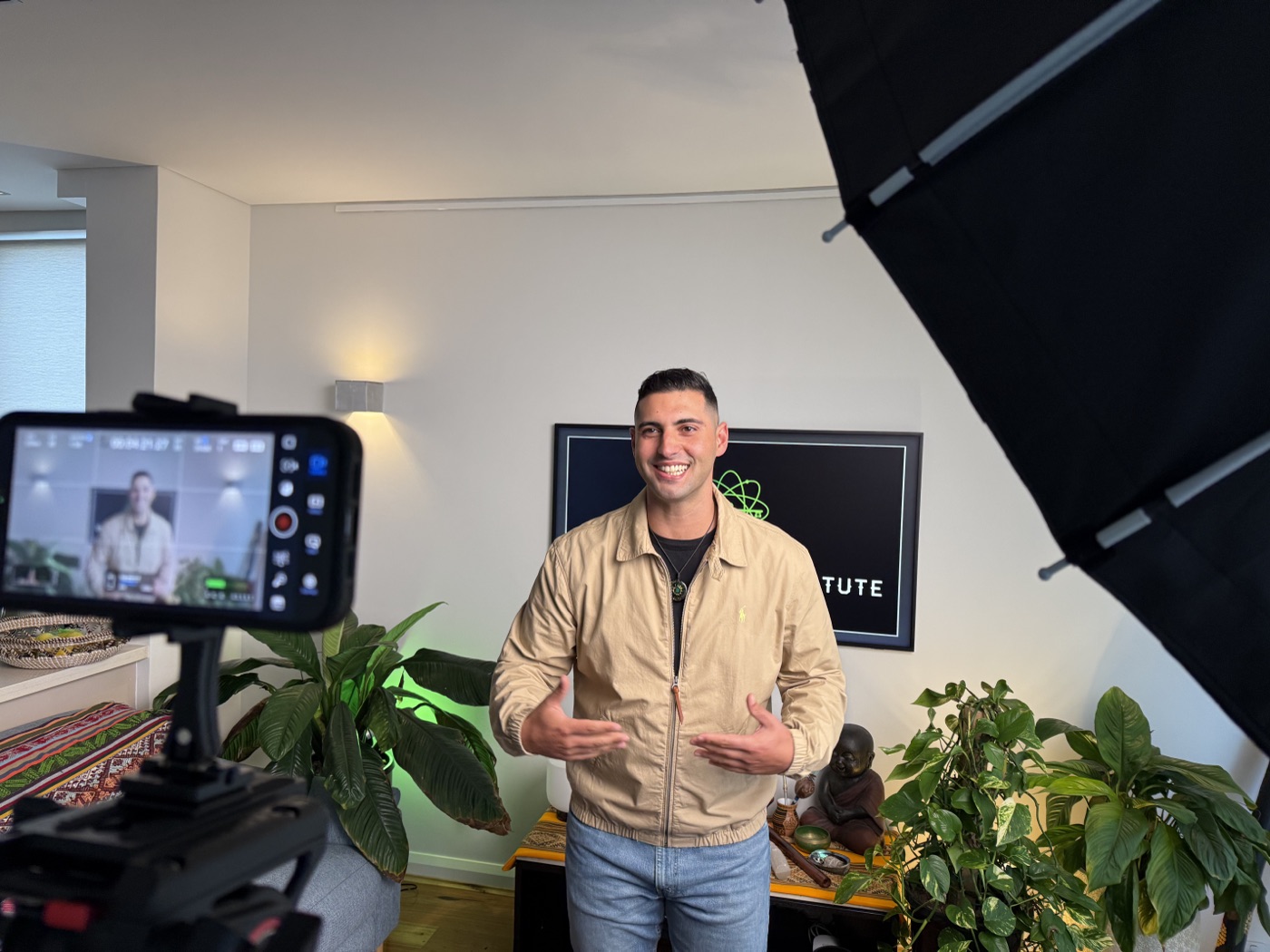
One trait has got me through more than anything else. It got me through imposter syndrome. It got me through starting a business while people doubted me. It got me through my first clients, when I'd only just become a practitioner.
That trait is confidence. It's one of the most overused words in personal development, and one of the most misunderstood. Jacob and I went into it with our students in one of our live Activation Workshops, and it's worth writing down properly.
What most people get wrong
Growing up, I picked up the idea that being too confident was a bad thing. If someone was very sure of themselves, they came across as arrogant. So, like a lot of people, I toned myself down to fit in.
Other people swing the other way. They think confidence means pumping yourself up, or believing you're better at something than you really are. That has a name, the Dunning-Kruger effect, and it isn't confidence either.
When I started coaching people on confidence, I noticed something in my clients and in my own life. I felt truly confident when I felt comfortable.
Confidence is comfort
Are you confident you can tie your shoelaces? Of course you are. You know you can do it, so there's nothing to be nervous about. You don't feel out of place. You're comfortable.
That's all confidence is. It's how comfortable you are being yourself in a situation.
Think of a night out with friends where you were lit up. You led the conversation and everything flowed. Now think of a night with the same people where you just felt off. Same people, same kind of setting. What changed?
For me, the difference is almost always where my attention is. When I'm focused on what other people think of me, I start to question myself. When my focus comes back to my own opinion of myself, the need for their approval drops away, and so does the discomfort.
Praise can be taken away
A lot of the comfort we feel comes from other people. A compliment on your clothes. A client telling you a session was amazing. A partner saying "you've got this."
That feels good. But the same person whose praise makes you feel confident can make you feel like a fraud just by going quiet. Then the spiral starts. Is it my hair? Was it something I said?
The word itself tells you this. It comes from the Latin confidere, which means to trust fully. Confidence is self-trust.
Self-trust is built from evidence
Lasting confidence doesn't come from affirmations in the mirror or from hyping yourself up. It comes from evidence, and that evidence has to come from you.
If I say I'll meditate three times this week and I do it, I learn that I can trust what I say. Nobody praised me. I didn't repeat a single affirmation. I just followed through, and my unconscious mind took note.
Do that over and over and you become someone who follows through. That's the person you start to trust.
I wasn't confident. I trusted myself.
The first time I ran a live training, it was a Facebook Live. There were 10 to 15 people waiting, and all I had to do was click "start live". I was terrified.
I wasn't confident, but I did trust myself. I'd been through a lot in life, and if I got through those things, I could get through this. So I didn't overthink it. I clicked the button.
Yes, I was nervous. It still turned out to be a really good training. Then I did it again, and again. The nerves came up before client sessions too, but by then I had behaviour that proved I could do it. No amount of telling myself would have done that.
If you work with people, this matters. Sooner or later a voice says "who are you to help someone?" If you wait to feel confident before you act, you'll be waiting a long time. If you trust yourself, you can act while the nerves are still there.
Only make promises you'll keep
I've trained this so hard that if I have any doubt I'll do something, I won't promise myself I'll do it. I would rather skip a gym session than tell myself I'm going and then not go.
That sounds small. It isn't. Every broken promise to yourself is evidence too, just in the wrong direction.
The little things stack. Jacob and I take real risks most days running the institute. The only reason we can is that we've built years of evidence leading up to it.
Try this this week
- Make one small promise to yourself, like three meditations this week or five minutes of breathwork a day.
- Only promise what you know you'll do. Smaller is better than broken.
- Keep it, even when your mind wanders. Sit the full five minutes.
- Before something that makes you nervous, take a deep breath and say "I trust myself". Then do it anyway.
- Afterwards, notice that you did it. That's one more piece of evidence.
You've been through things you once thought you wouldn't get through, and you got through them. That's already evidence. Confidence isn't something you have to go out and find. You build it, one kept promise at a time.
Luke Stringa is the CEO and co-founder of Quantum Key Institute. He and Jacob Stringa run live Activation Workshops each week for QKI students. Read more about Luke.